
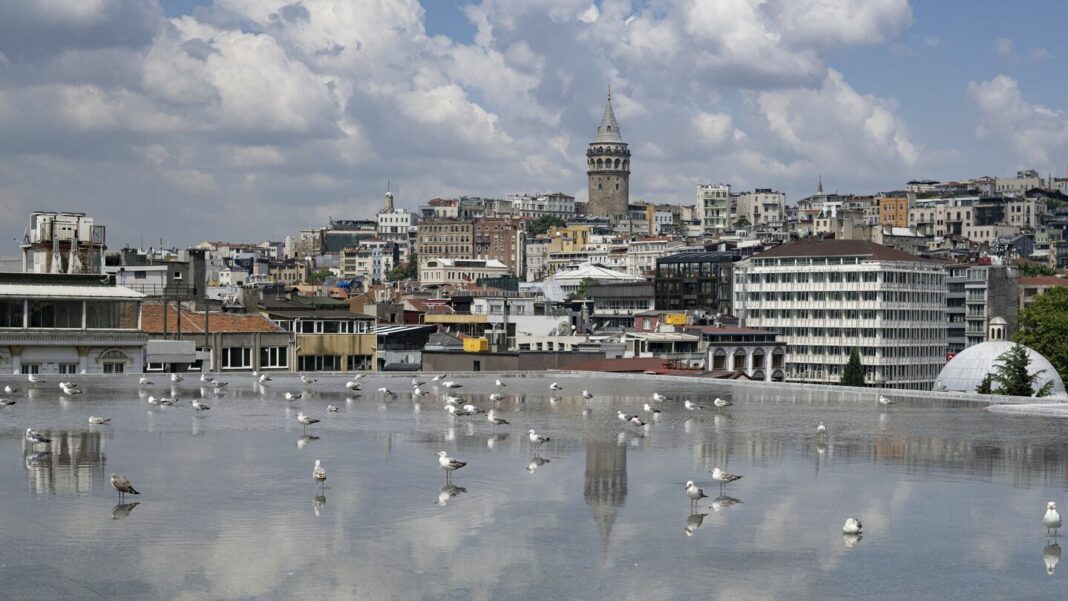

From Italian architect Renzo Piano’s Istanbul Modern to a restored mansion in Izmir, Turkey’s museums swept awards for architecture and visitor experience.
IZMIR — In a year when cultural institutions across Europe were recalibrating their public roles, museums in Turkey found themselves unusually confident, visible and rewarded. That momentum was clear in Istanbul Modern, which entered its third decade with sweeping international acclaim.
Designed by Italian architect Renzo Piano, the museum’s light-filled building on the Karakoy shore has become both a landmark of Istanbul’s skyline and a civic meeting point. The past year was marked by an expanded program of exhibitions, public talks, educational initiatives and free-access days aimed at broadening audiences, a strategy that resonated well beyond Turkey.
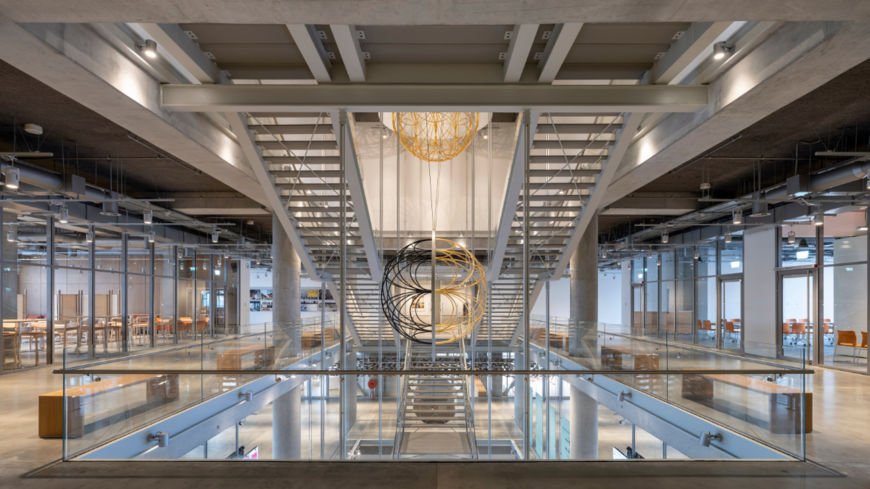
At the 2025 European Museum of the Year Awards, Istanbul Modern received the Portimao Award for Hospitality, Inclusivity and Belonging, joining a small group of European institutions recognized for redefining how museums welcome, engage and reflect their societies.
“Since our founding in 2004, we have striven to bring art together with society,” Istanbul Modern Chair Oya Eczacibasi said in a press release issued in May 2025, recalling an earlier EMYA Special Commendation in 2009. “Each award strengthens our belief in expanding art’s reach, while placing a greater responsibility on us.”
The recognition capped a remarkable recent run. Istanbul Modern’s building appeared on Architectural Digest’s list of the “Greatest Works of 2024,” was named among National Geographic’s “Top 20 Cultural Places in the World,” and was selected as Building of the Year by ArchDaily. At the World Architecture Festival, it took first prize in the Completed Buildings, Culture category. Beyond architecture, the museum’s outreach project “In Pursuit of a Dream,” which introduces girls to art through sustained mentorship, earned the 2024 Outstanding Museum Practice Award from the International Committee for Museums and Collections of Modern Art, a first for a Turkish initiative.
Turkey’s award-winning museums
While Turkey’s most visited museums are in Istanbul, institutions across the country have been earning international recognition for decades, often by combining strong curatorial vision with context-sensitive architecture. The Troya Museum, designed by Yalin Mimarlik and located beside the ancient city of Troy in northwestern Anatolia’s Canakkale, received the European Museum Forum Special Award in 2020. A year later, the winner was Eskisehir’s Odunpazari Modern Museum (OMM), designed by the Japanese architects Kengo Kuma and Associates. OMM received a Special Commendation in the European Museum of the Year Awards 2021, presented to museums with innovative perspectives and deemed exemplary.
Farther east, the Baksi Museum, perched above the Coruh Valley in the eastern Black Sea town of Bayburt and founded by artist Husamettin Kocan, won the Council of Europe Museum of the Year Award in 2014. Opened in 2010, Baksi became a reference point for socially engaged museology by linking contemporary art with local craftsmanship and rural life.
The Edirne Health Museum, located in the former Ottoman hospital complex of Sultan Bayezid II built in the late 15th century in Turkey’s northwest, earned the Council of Europe Museum Prize in 2004 for its innovative presentation of medical history. The Bodrum Museum of Underwater Archaeology, housed in Bodrum Castle on Turkey’s Aegean coast, was named Europe’s Museum of the Year back in 1995.
More recently, immersive storytelling has propelled a new category of recognition. The Ayasofya History and Experience Museum in Istanbul and the Ephesus Experience Museum in Selcuk, near Izmir on the Aegean coast, received multiple MUSE Creative Awards in 2023 and 2024 for their use of hologram, projection and augmented reality technologies to narrate layered histories, signaling how experiential design has become central to contemporary museum practice.
Future awards
Looking ahead to EMYA 2026, two Turkish museums have been shortlisted among 35 nominees from across Europe: the Zeyrek Cinili Hamam Museum in Istanbul and the Seddulbahir Fortress in Canakkale, overlooking the Dardanelles and the 1914 battlefield.
Zeyrek’s transformation from a 16th-century Ottoman bathhouse into a museum offers an intimate encounter with urban memory and craftsmanship, while Seddulbahir reframes military heritage through immersive narratives of conflict and collective remembrance tied to the Gallipoli campaign. Other nominees include institutions from across Europe such as museums in Lisbon, Stockholm, Berlin, Budapest, Munich and the CERN Science Gateway in Switzerland. The winners will be announced on June 13, 2026, in Bilbao.
A star rises in Izmir
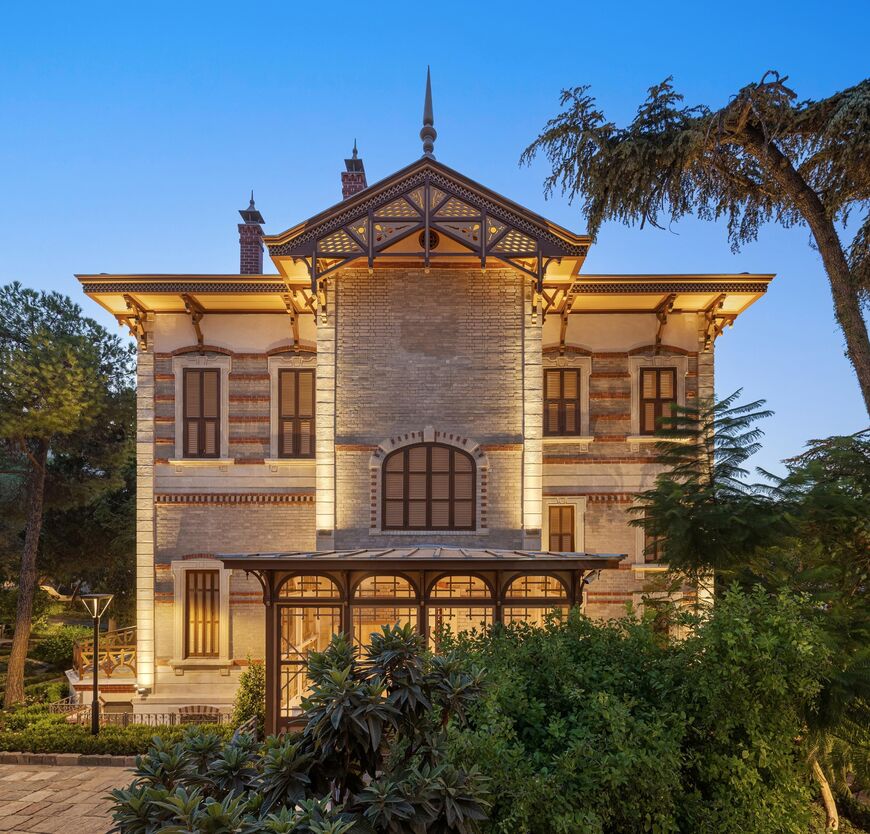
Amid these international currents, local recognition carries particular weight, and few recent openings illustrate this better than Arkas Sanat Goztepe. Opened in 2025 in Izmir’s Goztepe district on Turkey’s Aegean coast, the museum is housed in the restored Ayse and Seniha Mayda Mansion, a late Ottoman residence built between 1895 and 1907 by architect Raymond Charles Pere for Kamil Pasa, then governor of Izmir. Over time, the building served as an orphanage and a school before becoming the lifelong home of Ayse Mayda, Turkey’s first woman orthodontist, and her sister Seniha.
The restoration, led by architect Seda Ozen Bilgili and supported by collector Lucien Arkas, earned Arkas Sanat Goztepe the Izmir Municipality’s Jury’s Special Award in the Substantial Restoration category at Izmir Metropolitan Municipality. The jury cited the project’s respect for architectural authenticity and its contribution to cultural continuity by transforming a private residence into a public art space.
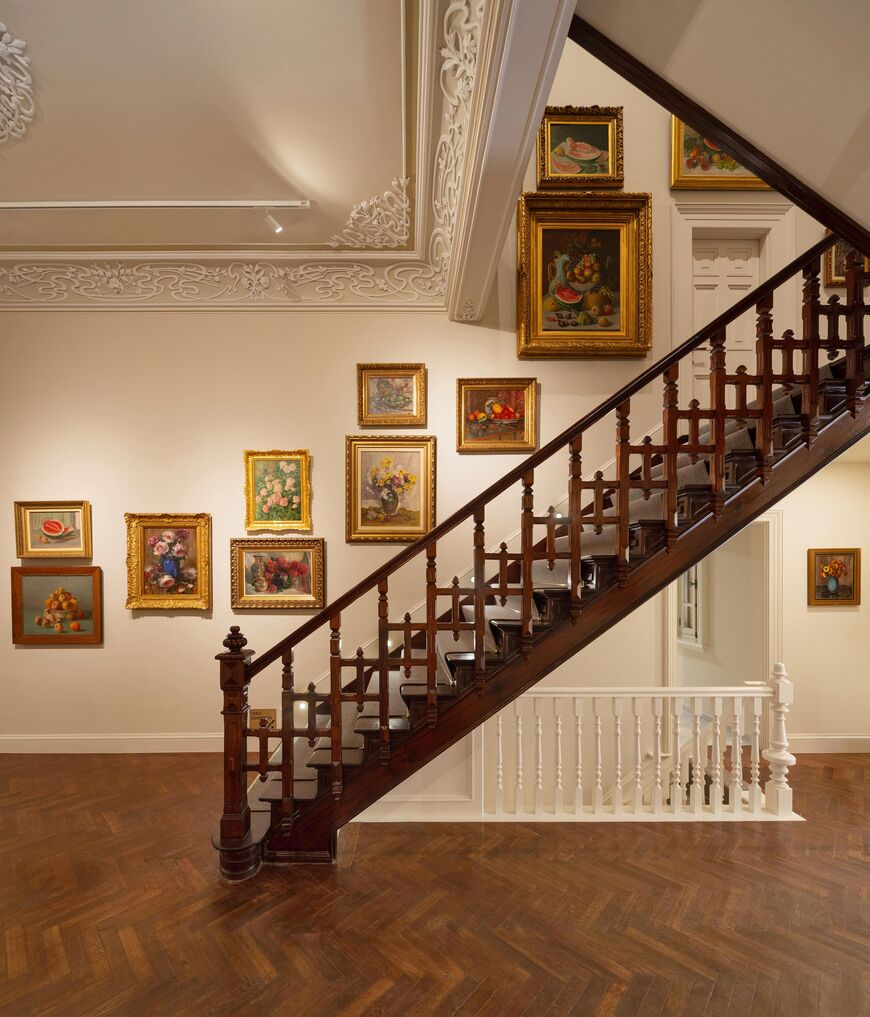
Today, Arkas Sanat Goztepe presents a permanent exhibition drawn from the Arkas Collection, tracing Turkish painting from the late Ottoman period through the mid 20th century. The selection includes works by Hoca Ali Riza, Ibrahim Calli, Nurullah Berk and Burhan Dogancay, offering a layered reading of Turkish modernism. As art historian Burcu Pelvanoglu of Mimar Sinan University told Al-Monitor, the museum approaches Turkish modernism not as a sequence of stylistic movements but as “a visual guide to the sociology of modernization,” highlighting shifts in social life, gender representation and artistic self-confidence. “From the portrait of soldiers to the nudes, the collection offers its testimony of the relationship between the artists and the state,” Pelvanoglu said. “It shows the pains of modernization, the struggle for style and originality during World War II and finally Turkish painters finding their own confidence and authenticity in the second half of the 20th century.”
Taken together, from Renzo Piano’s crystalline volumes on the Bosporus to a revived mansion overlooking the Aegean, 2025 revealed a museum landscape in Turkey that is confident, outward looking and increasingly influential.