

Iran war deepened concerns regarding the gas market, but Ankara’s diversified resources put it in a safe position
A sharp drop in Iranian gas flows to Turkey following Israel‘s strike on the South Pars gas field and Tehran’s retaliatory attacks across the Gulf has raised energy security concerns. But analysts say Ankara will likely be able to cushion the blow.
The South Pars, which Iran shares with Qatar, is the largest gas field in the world. It contains an estimated 1,800 trillion cubic feet (51 trillion cubic metres) of usable gas, enough to supply the world’s needs for 13 years.
It is also the biggest source of domestic energy in Iran, supplying 70 percent of the country’s consumption, including cities, petrochemical factories and power plants. The field also supplies Turkey.
So what happens if Iran stops supplying Ankara?
Data from Turkey’s Energy Market Regulatory Authority suggests that the country imports around 13 percent of its gas needs annually, roughly 7 billion cubic metres (bcm), from Iran.
Some pundits have questioned whether Ankara would need to seek additional gas sources if Iranian supplies were cut, as global markets struggle to secure resources and assess liquefied natural gas (LNG) options.
Olcay Aydilek, a Turkish journalist specialising in energy affairs, said Iran had already reduced the amount of gas it supplies to Turkey on Wednesday. The flow, which stood at 30-31 million cubic metres the previous day, dropped to 7-8m on Wednesday, he said, citing sources.
Turkey’s daily gas consumption is around 180m cubic metres.
While that appears on paper to be a significant amount, experts familiar with Ankara’s energy strategy are not overly concerned about the reduction in Iranian gas.
Alternative sources of gas
Muhdan Saglam, an analyst associated with the Ankara-based TEPAV think tank, told Middle East Eye that Ankara has other avenues for sourcing gas, including Russia.
Saglam said Turkey has large gas storage facilities, namely Salt Lake and Silivri, with a combined capacity of 6.3 bcm.
‘Even if Ankara used half of these reserves, there would be enough to replace the Iranian supply’
– Muhdan Saglam, analyst
Turkish Energy Minister Alparslan Bayraktar said in November that the country’s storage depots were full.
“Even if Ankara used half of these reserves, there would be enough to replace the Iranian supply,” Saglam said.
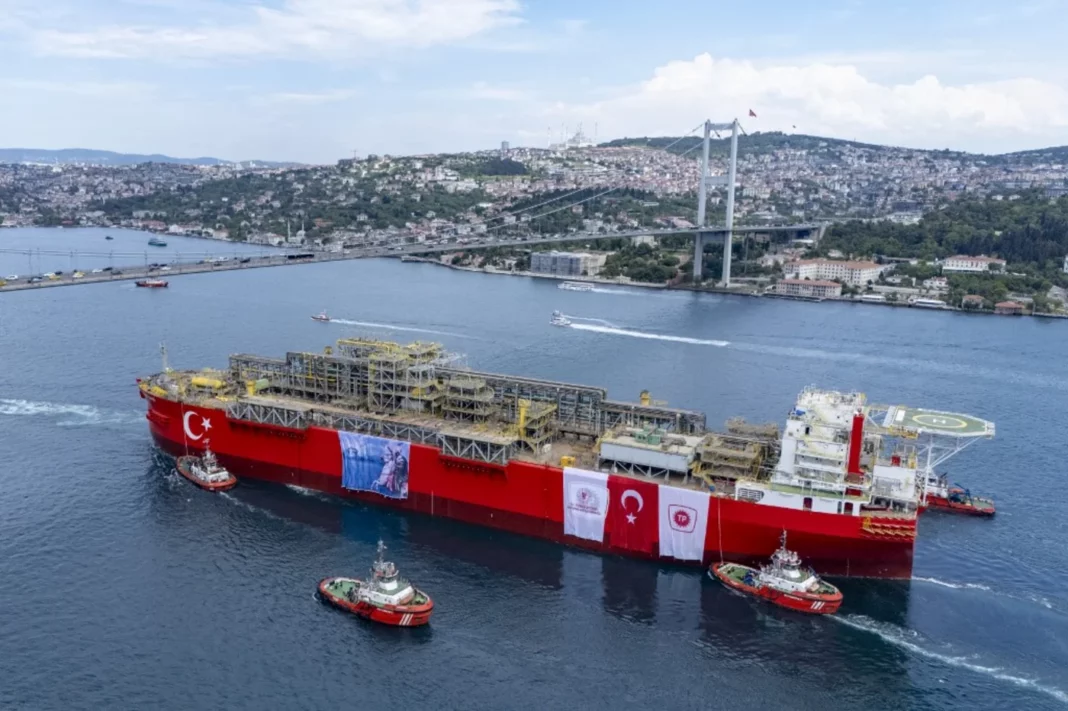
Meanwhile, Turkey’s own gas production in the Black Sea is currently feeding 10 million cubic metres of gas into the national network, making it easier for Ankara to adjust.
“There is spare Russian and Azerbaijani pipeline capacity,” Saglam said. “Last year, Turkey used only 21 bcm of Russian gas through Blue Stream and TurkStream, which have a combined annual capacity of around 30 bcm. Ankara could import more Russian gas.”
Turkey has in recent years avoided Russian LNG due to pricing disagreements, but it could also begin to make use of those resources.
“Turkey has been exporting 3.5 bcm of gas to Balkan countries. It can simply reduce that amount to make up the difference,” Saglam added.
Trump says US had ‘no idea’ Israel would attack Pars gas field in Iran
Bayraktar reiterated earlier this week in televised comments that Ankara has no gas supply problem.
Since taking office, the minister has continued to diversify Turkey’s energy resources by supporting domestic production while also relying heavily on cheaper US LNG options.
In September, Turkey’s state energy company BOTAS signed a 20-year deal with trading company Mercuria to buy American LNG. Beginning this year, the company will supply 4 bcm of LNG, according to the agreement.
Emin Emrah Danis, general manager of Istanbul-based Moben Consulting, Investment, Research, told Middle East Eye earlier this month that Turkey’s gas consumption would slow as the worst of winter passes.
Danis said Turkey was already accustomed to supply disruptions from Iran, which in past years has cut gas flows to Turkey to meet Iran’s domestic needs, creating problems for some Turkish industries that depend on Iranian gas.
He added that Ankara’s investments in renewable energy were also beginning to pay off. For example, in the first week of January, one quarter of Turkey’s national energy needs were met by wind power.
Heavy rains in the first months of the year, along with mild weather in March, also reduced gas consumption, allowing renewable sources to play a larger role in daily energy use.