
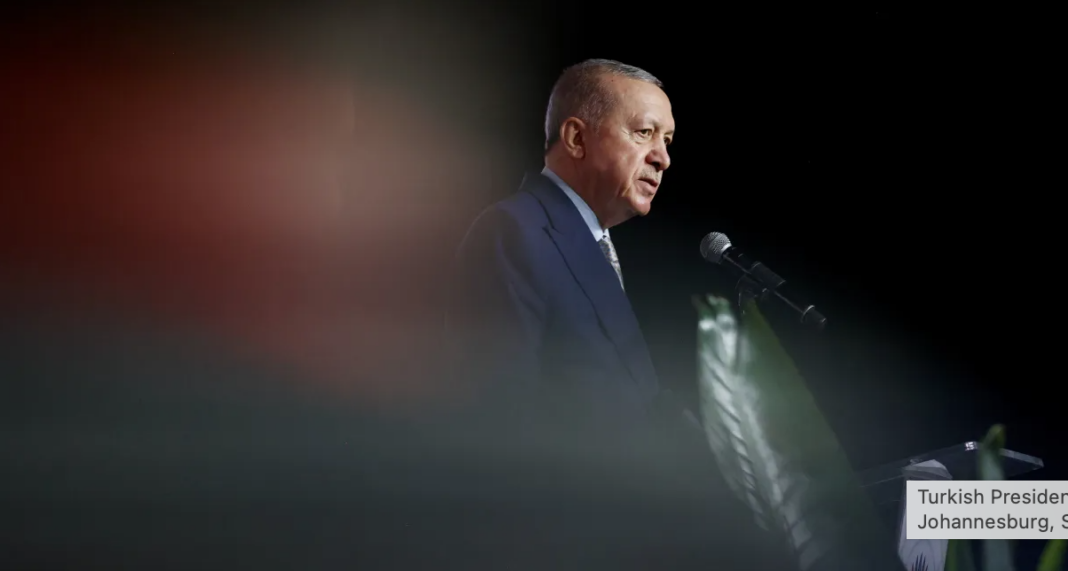

Turkish Power Does Not Match the President’s Ambitions
Foreign Affairs, December 25, 2025
When Turkish President Recep Tayyip Erdogan walked into the White House in late September, he needed to come out of the visit with a win. Erdogan had presented the Turkish public a grand vision of Turkey’s leadership in the Middle East, but that vision was increasingly clouded by doubts. Domestic dissent and economic woes required Erdogan’s constant attention and risked tarnishing his legacy after 23 years in power. The success of Turkish-backed opposition forces in toppling Bashar al-Assad’s regime in Syria last December appeared to offer a golden opportunity to expand Turkey’s influence, but it became clear that the monumental task of rebuilding Syria would be beyond Turkey’s ability to do alone.
It seemed that engaging U.S. President Donald Trump could provide the boost Erdogan needed. Although Ankara and Washington have had their disagreements recently, including over Turkey’s purchase of Russian missile systems and repeated incursions into Syria, Trump saw in Erdogan a partner to help stabilize the Middle East. Turkey had leverage over Hamas, which could come in handy during the U.S.-led cease-fire negotiations with Israel, and Turkey could support peacekeeping and reconstruction efforts in Gaza and Ukraine. Trump, unlike his predecessors, seemed to admire Erdogan’s brand of illiberalism and his skillful geopolitical balancing, repeatedly calling him “a friend” and “a very strong leader.” Turkish officials, for their part, hoped that a rebooted partnership with the transactional Trump could help Turkey elevate its profile in the Middle East.
At first, they appeared to get their wish. Within days of Erdogan’s visit to Washington, Turkish intelligence chief Ibrahim Kalin joined talks in Egypt over a cease-fire in Gaza—Turkey has long supported the Palestinian cause, but this was the first time Ankara had formally entered Israeli-Palestinian peace negotiations. When the cease-fire deal was signed, on October 13, Erdogan stood beside Trump and the leaders of Egypt and Qatar. To the Turkish president’s supporters, his participation was highly symbolic. More than 100 years earlier, General Edmund Allenby had led the British army into Jerusalem, ending four centuries of Ottoman rule. But now Turkey was back. In recent years, Turkish troops have been active in Iraq, Libya, and Syria. Striding center stage into the politics of the Holy Land was the final reclamation of Turkey’s historic role in the Middle East.
Or so Erdogan would want the Turks to believe. In truth, Turkey’s power so far does not match Erdogan’s aspirations to establish a Turkish-led regional order. Trump’s embrace has been good for optics, but the American president’s impulsive, unstructured foreign policy is highly unlikely to boost Turkey’s influence in the region—or to persuade the rest of the Middle East to accept it. On its own, Turkey faces too many internal problems, including a strained economy and a hollowed-out state, and too much external opposition, particularly from a confident and aggressive Israel, to build a regional order on Ankara’s terms. And if Erdogan cannot make good on his promise to usher in a new age of Turkish power, the domestic pressures he faces could mount as Turkey continues its strategic drift in an increasingly unsafe world.