
 cleverly combines film clips of characters talking about “the system” to show how malleable, and empty, that idea can be. A documentary I would have liked to watch about commemorating the victims of the Madımak Hotel massacre, The Cranes of 1993 by Doğa Korkmaz, unfortunately had no subtitles in any language and the intermeshing sounds of the different videos in the space made it too hard to follow the audio track.)
Istanbul etc. December 29, 2025
A former capital of the Ottoman Empire and Turkey’s fourth biggest metropolis, the city of Bursa is best known for its historic monuments, its ski mountain Uludağ, its once-pivotal position in the silk trade, and its İskender kebab. It’s also home to the largest and longest-running photography event in Turkey, the Bursa International Photography Festival (Bursa FotoFest), now in its 15th year. Impressed by last year’s edition, I was excited about making a return visit.
While the previous theme of Urban Defiance provided a powerful (if occasionally repetitive) unifying concept for a strong selection of work, I found this year’s festival, on the more nebulous theme of Time of Rupture, less cohesive and consistent, especially in the open call group exhibitions staged in two city-center squares. But there was still plenty of fine work in diverse styles spread throughout the festival’s 10 venues.
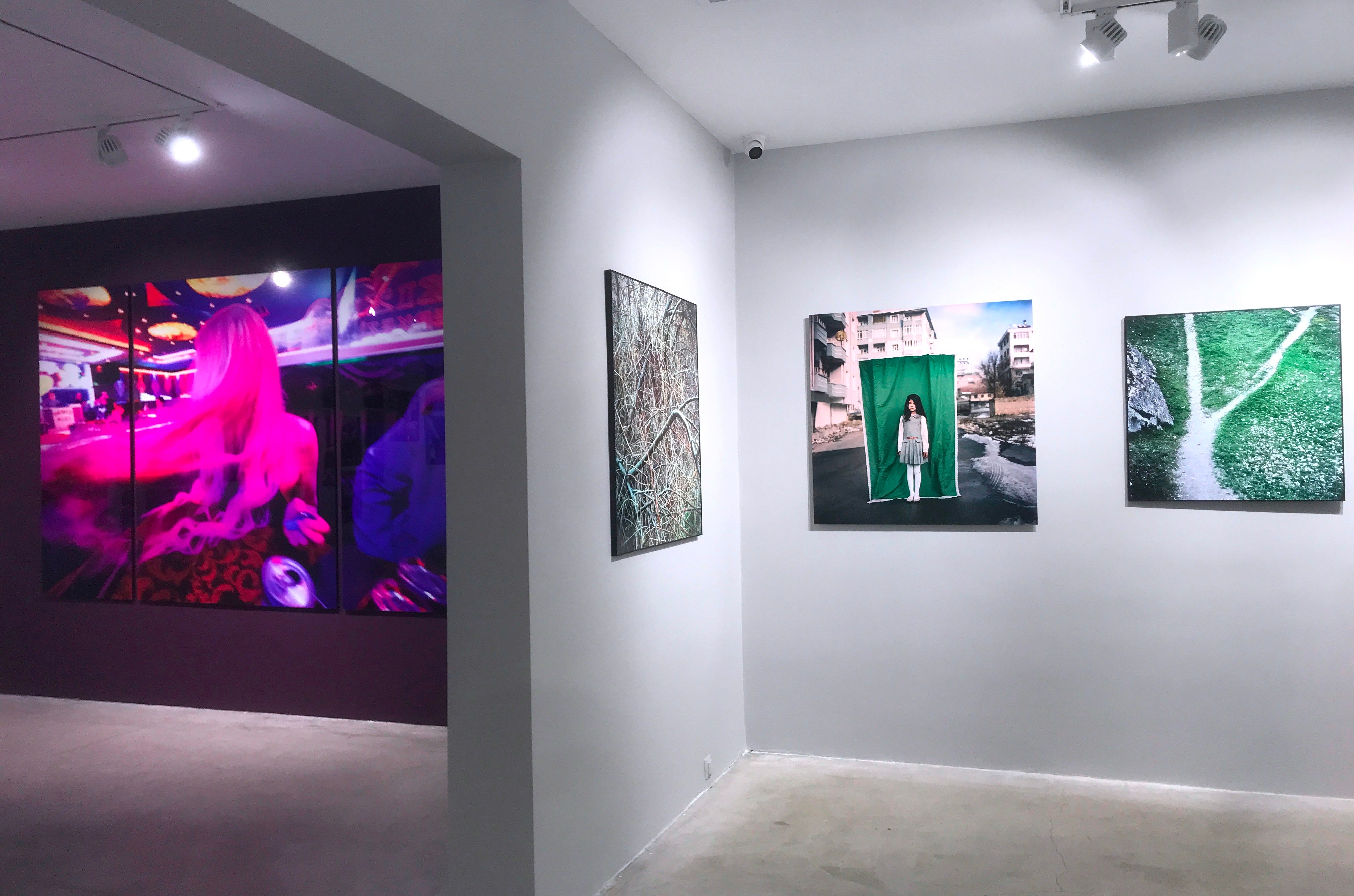
Some of my favorites were unfortunately in the venue that’s the hardest to get to, the Meteor Balat Culture House in a suburban development nearly 2km from the nearest metro stop. Here, Ayla Güvenç İmir’s intimate documentary series Pavyon takes the viewer backstage in Ankara’s seedy nightclub culture, while
pairs portraits of Afghan refugees in Turkey with somber landscapes in Araf (Purgatory). Kemal Aslan’s artful reportage from protests in Turkey in Deeply rounds out a solid collection.
The other far-flung venue, the Nâzım Hikmet Cultural Center, shows a more mixed bag of work in its subterranean gallery. I loved Serkan Çolak’s Transformation series of humorous and surreal black-and-white photographs of discarded objects, and found Hilal Sevlü and Emre Burhan’s video shorts The Birds, Heterotopia, Words and Things, many of them dealing with migration and displacement, to be tender and moving. (The videos have English subtitles, but the screening area should be darker and there’s no place to sit while watching them.) A. Nur Türk’s moody, fractured portraits in the series Fourth Person also caught my eye.
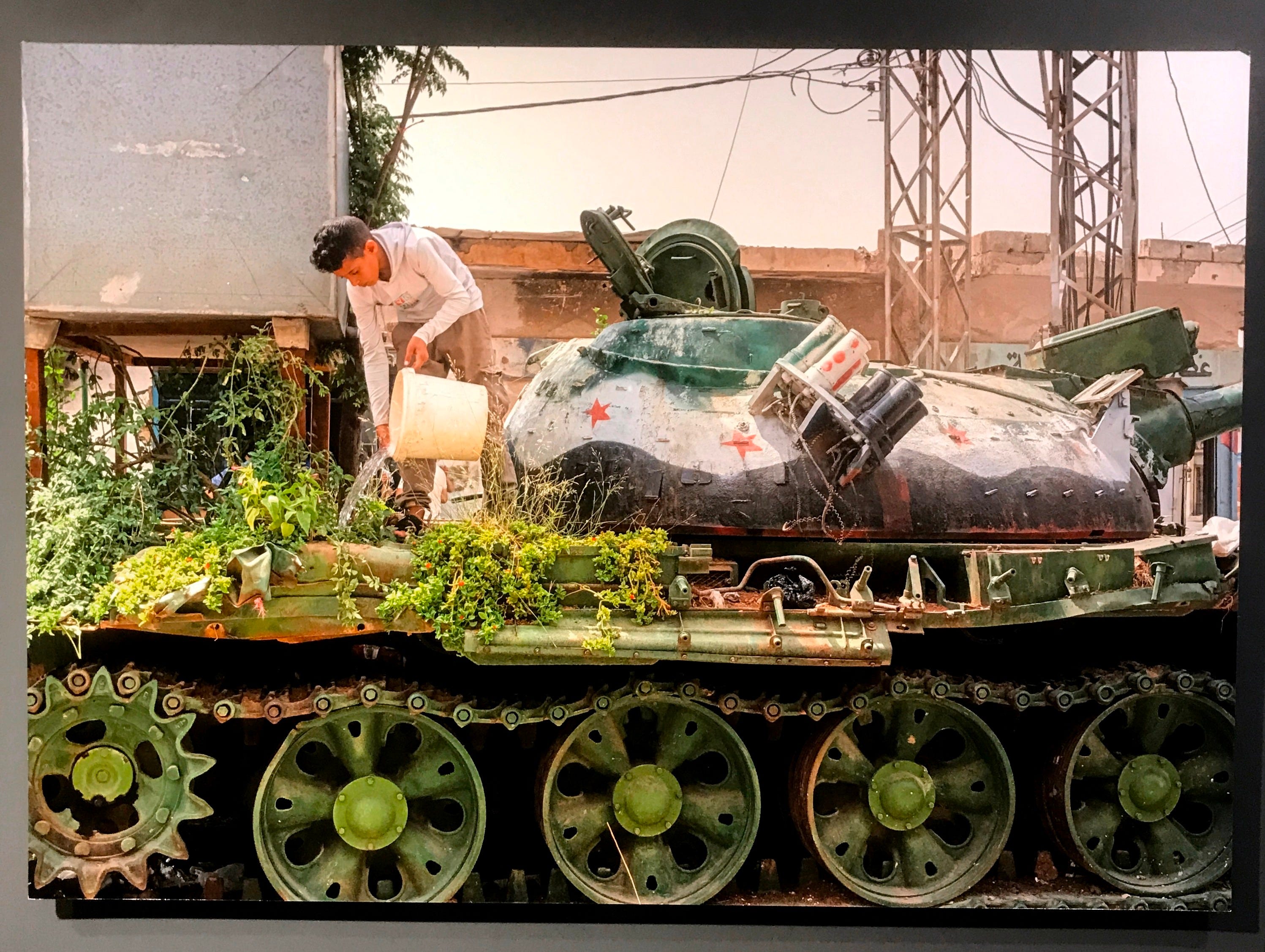
In the city center, Iranian photographer Forough Alaei’s images of women and girls in When Women Lead at the Tayyare Cultural Center pop with color, energy, and a quiet defiance. At the Bursa State Fine Arts Gallery, Cenk Erdoğan’s fair_play series stands out for its unvarnished, Martin Parr-esque look at county fairs in Anatolia. A striking, sobering pair of photojournalism projects – Abir Abdullah’s images of climate migrants in Bangladesh and Bülent Kılıç’s reportage from Syria following the fall of the Assad regime – are highlights at the Ressam Şefik Bursalı Art Gallery, along with Berge Arabian’s cinematic Longing: A Road Story, a visual retracing of his Armenian father’s migration from Diyarbakır to Aleppo in 1930.
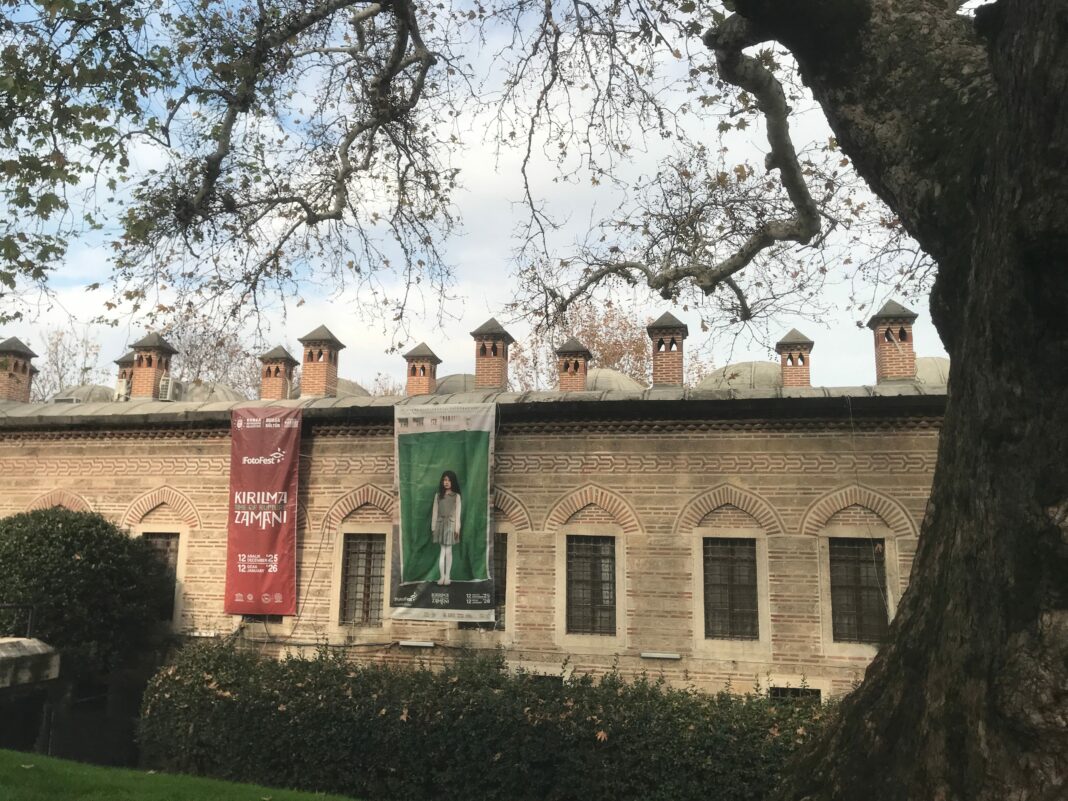
The former dungeons of the Zindankapı, part of Bursa’s ancient fortifications, are given over to video works; my favorite, The system is by Kerem Ozan Bayraktar (previously shown at Sanatorium in Istanbul) cleverly combines film clips of characters talking about “the system” to show how malleable, and empty, that idea can be. A documentary I would have liked to watch about commemorating the victims of the Madımak Hotel massacre, The Cranes of 1993 by Doğa Korkmaz, unfortunately had no subtitles in any language and the intermeshing sounds of the different videos in the space made it too hard to follow the audio track.
To my mind, the festival’s biggest missed opportunity is the exhibition at the Atatürk Cultural Center in Merinos Culture Park, which features the work of various photography-based collectives and initiatives in different Turkish cities along with the work of students from two local high schools, children from a rural village of Bursa, and members of the Bursa City Council’s Assembly for People with Disabilities. Though laudable in concept, the images are displayed in a lackluster way, with inadequate lighting and not enough context to really appreciate the different viewpoints presented.
Despite its flaws, Time of Rupture is still a worthwhile exhibition with a commendable commitment to bringing a broad range of work into the city’s public spaces. Photography enthusiasts will surely find something that appeals to them; if you go, drop a note in the comments about which works you liked best (or least).
The Bursa FotoFest is free to the public and runs until 12 January 2026. The Tayyare Cultural Center and the Atatürk Cultural Center are open daily 10am to 7pm and the Ressam Şefik Bursa Art Gallery daily 10am to 6pm. The Bursa State Fine Arts Gallery (Mon-Sat 10am to 7pm) is closed on Sundays and the Zindankapı (Tue-Sun 9am to 5:30pm), Meteor Balat Cultural Center (Tue-Sun 10am to 6pm), and Nâzım Hikmet Cultural Center (Tue-Sun 8am to 6pm) are closed on Mondays. The UNESCO Square and Ertuğrul Bey Square are open 24/7.