

Bilateral trade between the United States and Turkey reached almost $43 billion in 2024, according to the US trade representative.
Turkish Trade Minister Omer Bolat will head to Washington Friday for talks with US officials aimed at boosting bilateral trade and expanding cooperation in key sectors like defense and energy.
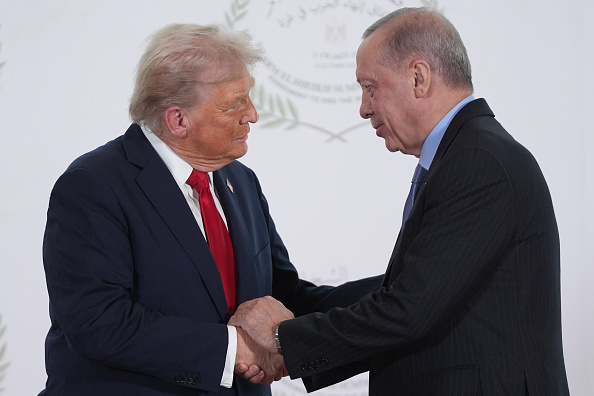
What happened: On Sept. 25, Turkish President Recep Tayyip Erdogan met his US counterpart, Donald Trump, at the White House, where the leaders reiterated their goal of raising bilateral trade to $100 billion per year. The two countries have not set a firm deadline for reaching that target.
On Friday, Bolat is scheduled to meet US Trade Representative Jamieson Greer and Commerce Secretary Howard Lutnick as well as representatives from companies affiliated with the US Chamber of Commerce.
“We believe our meetings in Washington will broaden opportunities for cooperation in energy, defense, investments and strategic sectors,” Bolat wrote in a post on X on Thursday, adding that the effort “will open new doors for our entrepreneurs and exporters.”
The meetings are expected to focus on implementing steps toward reaching the trade goal and using existing frameworks such as the Trade and Investment Framework Agreement. The TIFA came into force in 2000, serving as a platform for dialogue on trade, investment, intellectual property and economic issues to foster closer commercial ties, with both countries holding regular meetings.
Why it matters: Bilateral trade including goods and services between Turkey and the US reached almost $43 billion in 2024, according to Greer, up 8.6% ($3.4 billion) from 2023.
Turkey exported nearly $16.5 billion worth of goods to the US last year, led by machinery, precious stones and metals, automotive products, carpets, cement and electrical equipment, while importing roughly $16.2 billion, mainly mineral fuels, oils, iron and steel, machinery, organic chemicals and plastics, according to the Turkish Statistical Institute.
Know more: During the Sept. 25 White House talks, Erdogan and Trump advanced several areas of economic cooperation, including signing a planned Turkish Airlines purchase of 225 Boeing aircraft and a memorandum of understanding on civil nuclear cooperation aimed at expanding collaboration on reactor development and energy technology.
The two also discussed increasing US liquefied natural gas supplies to Turkey and updating the bilateral trade road map tied to the $100 billion target.
Energy will be a key pillar of the push. The newly appointed US consul general in Istanbul, Michael Lally, told Anadolu Agency on the sidelines of the World LNG Summit in Istanbul on Dec. 5 that LNG cooperation is a key part of that effort. He described Ankara as a strategic partner to Washington in expanding energy security, supply chain resilience and competitive pricing.
On Sept. 23, BOTAS, the state-owned Turkish company responsible for oil and gas trading and infrastructure, and US energy firm Mercuria signed an LNG purchase and sale agreement. Under the deal, BOTAS will receive 4 billion cubic meters of US-sourced LNG per year for 20 years both at American loading ports and at regasification terminals across Turkey, Europe and North Africa.
Ezgi Akin contributed to this report from Ankara.