

Key Takeaways:
- Corridor-Centred Security: Israel, Greece, Cyprus, and the U.S. are building interlocking military, energy, and infrastructure networks to increase resilience and strategic flexibility across the Eastern Mediterranean and South Caucasus.
- Redundancy Over Concentration: Investments in missiles, ports, cables, and rail corridors prioritise redundancy, enabling Europe and NATO to maintain operational continuity even if key transit states or chokepoints are disrupted.
- Dual-Track Strategic Logic: Simultaneous support for Eastern Mediterranean and Zangezur corridors reflects a U.S. strategy of optionality, balancing competing regional alignments while reducing reliance on Russia and limiting single-route vulnerabilities.
- Energy and Military Integration: Infrastructure projects such as the Great Sea Interconnector and Zangezur corridor are both commercial and strategic, serving as conduits for energy, trade, and military logistics in a multipolar competition.
- Geography as Leverage: Greece, Cyprus, Israel, and the U.S. are converting geographic position into strategic advantage, making the region harder to coerce, easier to defend, and more effective as a bridge for power, information, and energy flows.
Corridor Logic and Regional Redundancy
What appears as an Israel–Greece–Greek Cypriot military and energy alignment directed against Türkiye also conforms to a broader corridor logic that has become more explicit since 2022. The region is being reorganised around redundancy, not only in combat power but also in the routes that transport energy, data, and materiel. These developments reflect a layered approach: securing against conventional military threats from Türkiye, mitigating European reliance on Russian energy, and ensuring the operational flexibility of North Atlantice Treaty Organization (NATO) reinforcement on the south-eastern flank.
Viewed in this way, Eastern Mediterranean procurement, basing choices, and infrastructure projects are not solely concerned with deterrence in the Aegean. They also protect the physical and political arteries that could sustain Europe during a prolonged confrontation with Russia, or in any scenario where choke points or single transit states become unreliable. Simultaneously, this alignment needs to be considered from Türkiye’s perspective, where strategic concerns regarding encirclement, loss of influence, and constrained mobility shape its own countermeasures and force posture.
The deeper logic is that security cooperation and infrastructure planning are merging into a single strategic portfolio. Missiles, ports, undersea cables, and rail corridors are treated not as isolated instruments but as interlocking components of a system designed for resilience, operational continuity, and leverage management across a complex, multipolar environment. The emerging architecture prioritises redundancy, multi-use capability, and adaptability, recognising that future competition will not be defined solely by territorial control but by dominance over energy flows, lines of communication, and strategic chokepoints.
Fortifying the Flank: Military and Strategic Networks
Greece’s Operational Modernisation
On the Türkiye-facing layer, the military dimension has become operational rather than symbolic. Greece’s recent approval to acquire 36 Israeli-made PULS rocket artillery systems for approximately €650 million, with reported ranges of up to 300 kilometres, is a tangible example of long-range cost imposition aimed at the north-eastern land border and the island environment. This sits within a broader modernisation plan publicly discussed at around €28 billion through 2036, and is paired with negotiations for an air and missile defence architecture reportedly costing roughly €3 billion.
This matters because the strategic effect is not merely an increase in firepower. It reshapes the geometry of crisis, whereby dispersed launchers, improved sensing capabilities, and layered defences reduce the credibility of limited coercion and heighten the risks of escalation for any actor attempting to exploit ambiguity in the Aegean or around Cyprus.Cyprus and Infrastructure Security
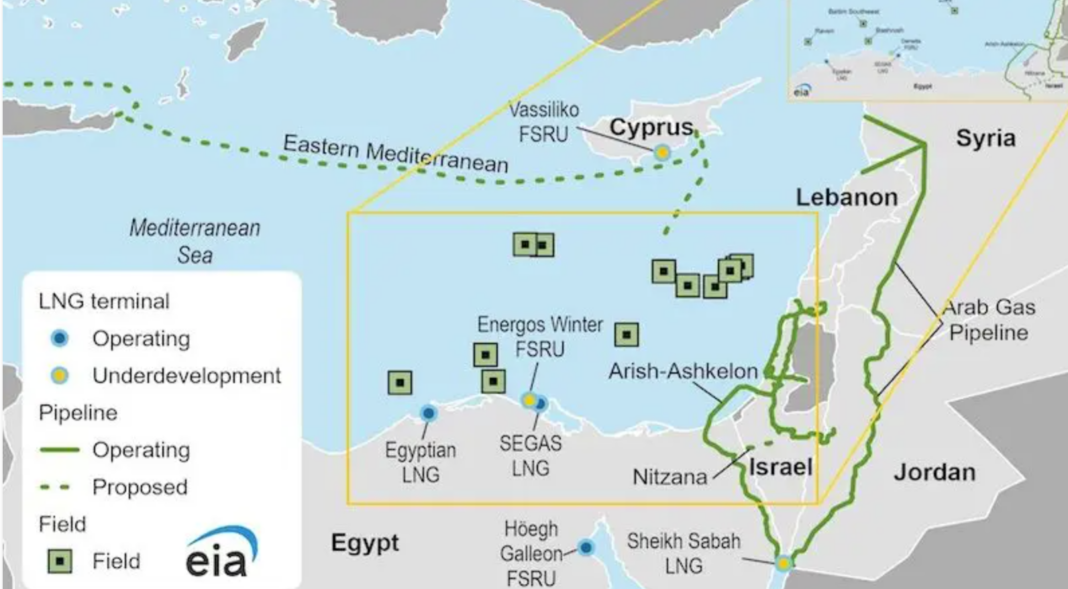
Cyprus, in turn, is being increasingly integrated into the same ecosystem, partly due to the Cyprus dispute but also owing to infrastructure security considerations. The Great Sea Interconnector concept, frequently discussed as a Greece–Cyprus link that could later extend to Israel, is reported at approximately €1.9–1.94 billion and described as roughly 1,240 kilometres long, reaching depths of up to 3,000 metres, with European Union funding reportedly around €800 million. Cyprus has also publicly outlined a future in which it could produce approximately 4 gigawatts of electricity while currently consuming around 0.5 gigawatts, making interconnection not a luxury but a structural transformation.
Placing such projects at the centre of national strategy creates strong incentives for maritime domain awareness, seabed monitoring, and air defence modernisation, since cables, survey vessels, and power nodes become strategic targets in a contested sea.
NATO and US Reinforcement Posture
The Russia-facing layer is where the United States’ (US) posture in Greece becomes most consequential, even when public debate frames issues primarily through Greek–Turkish rivalry. After 2022, NATO’s central challenge is not simply deterrence by presence but deterrence by reinforcement, i.e., the capacity to move and sustain forces at scale under pressure. Greece offers both logistical redundancy and political flexibility for the south-eastern flank.
Consequently, nodes such as Alexandroupolis have been identified as valuable for moving equipment towards Bulgaria, Romania, and the wider eastern flank, while Souda Bay on Crete continues to function as a high-value platform for naval and air operations across the Eastern Mediterranean and beyond. In this interpretation, the same hardening of bases and networks that supports Greece in a Turkish contingency also underpins alliance planning aimed at constraining Russian options and sustaining operations within a connected theatre that links the Black Sea, the Balkans, and the Eastern Mediterranean.Zangezur and Strategic Connectivity
Zangezur is where the corridor logic becomes unmistakably explicit and where energy security, great power competition, and regional alignments fuse.
The US-Brokered Corridor
In August 2025, the US facilitated an Armenia–Azerbaijan peace framework that included exclusive US development rights for a transit corridor linking mainland Azerbaijan to Nakhchivan through Armenia, a route widely discussed as the Zangezur corridor concept. Reports describe the corridor as approximately 43 kilometres long, with development rights framed for roughly 99 years, and US officials citing interest from nine companies, including three US firms.
The significance lies not only in Washington’s mediation. The corridor itself is envisaged as multi-use infrastructure, encompassing not just road and rail connections but also potential trade, fibre connectivity, and future energy lines. Strategically, it represents a means of reducing reliance on Russia-mediated formats in the South Caucasus while embedding a US-anchored commercial and political stake along a sensitive junction near Iran, at the edge of Russia’s traditional sphere of influence, and on the connective tissue between the Caspian and Anatolia.
Balancing Regional Alignments
The simultaneous development of competing corridor strategies—one through Greece and Cyprus, the other via Zangezur—demonstrates a deliberate US approach to optionality and route diversity, transforming an apparent contradiction into strategic clarity. The Israel–Greece–Greek Cypriot posture is often interpreted as a balancing coalition against Türkiye, while a Zangezur-style corridor strengthens the Türkiye–Azerbaijan land bridge and could enhance Ankara’s connectivity leverage. Yet the US can rationally support both concurrently if its primary objective is route diversity and leverage management, rather than choosing a single regional camp permanently.
A corridor through Armenia can dilute Russian influence, reduce Iran’s ability to monopolise or threaten north–south access, and expand options for moving goods, data, and potentially energy across Eurasia. Simultaneously, reinforcing Greece and deepening Israel–Greece–Cyprus cooperation helps ensure that Europe has alternative maritime and electricity routes that do not depend on a single transit state and that can be defended in a high-threat environment. In other words, Washington can construct a portfolio of corridors, some running through Türkiye, others bypassing it, because the strategic goal is optionality under pressure.
Strategic Incentives and Optionality
When considered as a unified plan, the underlying logic is not a secret blueprint but a consistent set of incentives. Europe seeks reduced vulnerability to Russian energy coercion. The US desires a Europe less dependent on Russia while maintaining multiple logistical pathways for NATO reinforcement. Israel seeks secure export and connectivity options that mitigate isolation and bolster strategic depth, particularly following regional shocks. Greece and Cyprus aim to convert geography into leverage, becoming hubs for power, ports, and connectivity while fortifying themselves against coercion.
The outcome is a corridor-centred security architecture stretching from the South Caucasus into the Eastern Mediterranean, wherein Zangezur-type connectivity, Aegean and Cyprus military modernisation, Souda Bay and Greek logistics nodes, and flagship projects such as the subsea interconnector collectively reinforce a single strategic objective: a region that is harder to coerce, more resistant to blockade, and more valuable as a bridge for energy and military movement in a protracted competition where Russia remains the central pacing threat, even when Türkiye dominates local headlines.
Building Resilient Corridors in a Contested Eastern Mediterranean
The emergent corridor logic in the Eastern Mediterranean and South Caucasus transcends a collection of bilateral deals or military acquisitions—it constitutes a strategic system designed for redundancy, resilience, and leverage. Greece, Cyprus, and Israel are fortifying not merely borders but the arteries of energy, data, and materiel that sustain Europe and the broader alliance network. Zangezur and US-backed transit corridors demonstrate that multi-use infrastructure can simultaneously serve as commercial lifelines, deterrence mechanisms, and instruments of geopolitical optionality.
For policymakers, the lesson is clear: investments in corridors, ports, cables, and layered defences are not merely local or symbolic—they are central to sustaining operational freedom, deterring coercion, and shaping strategic competition in a multipolar environment. Success will depend on integrating military, economic, and infrastructure planning into a coherent portfolio in which the value of redundancy outweighs the temptation to concentrate on any single theatre or route.
In short, corridor-centred thinking transforms geography into strategy. Those who control the flows of missiles, power, and information—not merely territory—will define the security architecture of the Eastern Mediterranean and beyond for decades to come.