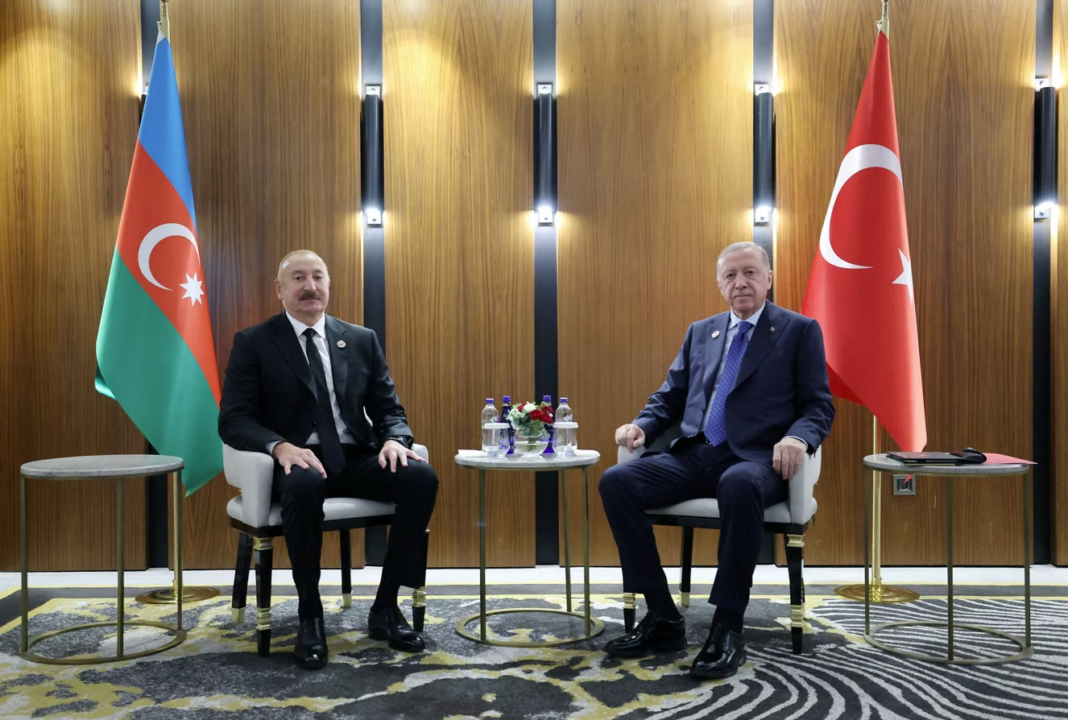
 to avoid meeting Israeli President Isaac Herzog. Turkish Foreign Minister Hakan Fidan also boycotted Herzog’s address. Baku saw this as an unfriendly gesture towards Aliyev.)
JAM News, 6/11/2026
Turkish President Recep Tayyip Erdoğan told journalists on 5 November that he planned to visit Azerbaijan on 8 November, Victory Day, provided no extraordinary circumstances arose. He also said he had spoken by phone with President Ilham Aliyev and sent Turkey’s intelligence chief and foreign minister to Baku.
“The unbreakable ties between our countries rest on a shared history, culture and destiny – and, God willing, a shared future.”
However, Erdoğan’s planned visit comes amid a two-month cooling of relations between the two countries. On 30 October, President Aliyev skipped the summit of the Organisation of Turkic States in Ankara, even though the meeting marked the transfer of the organisation’s chairmanship from Azerbaijan to Turkey.
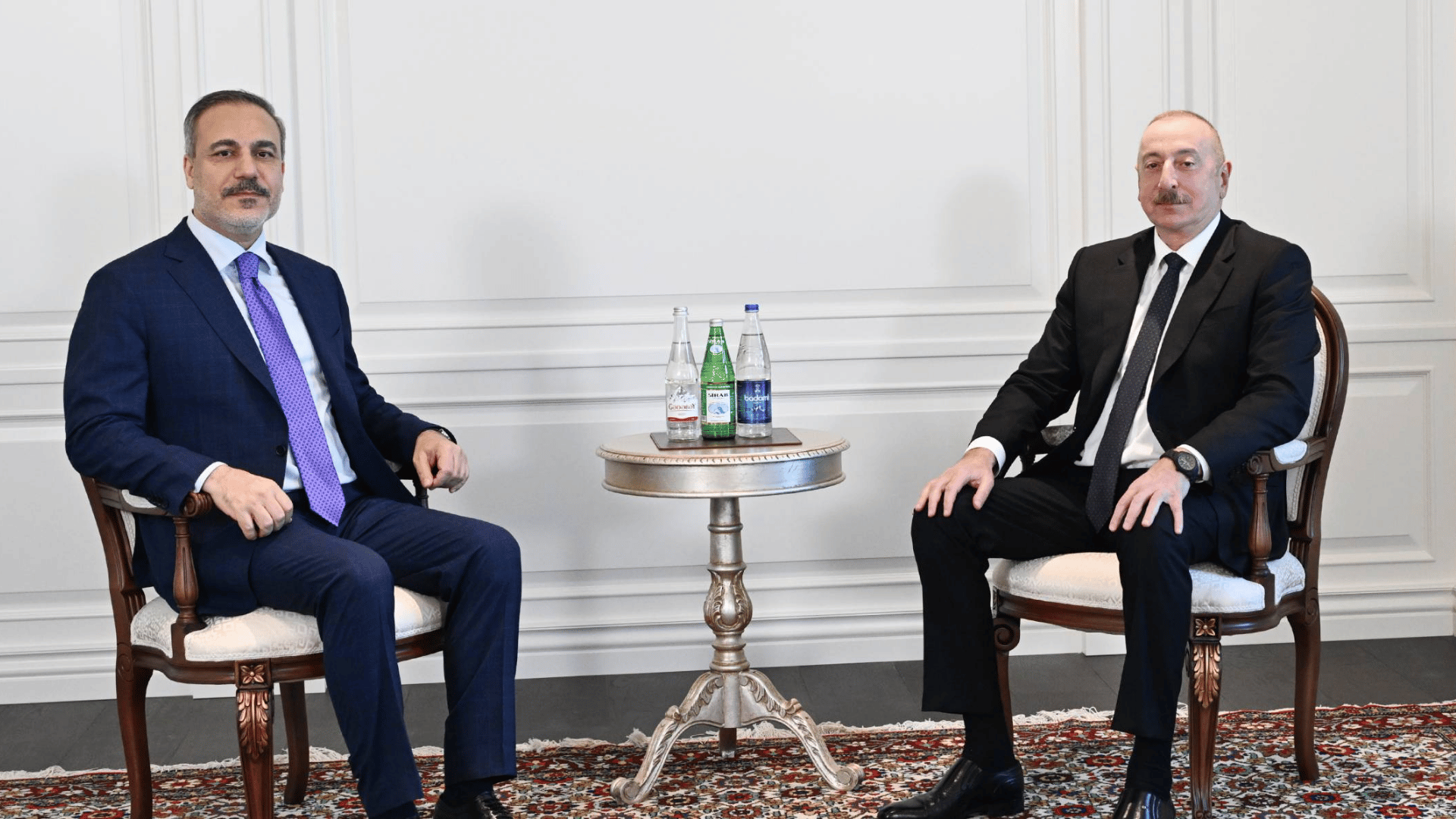
We reported in October on Turkish Foreign Minister Hakan Fidan’s visit to Baku.
What steps has Ankara taken to resolve the disagreements, what does Baku want, and what does the current situation reveal about relations between the two countries?
Fidan says ‘everything is fine’ in Baku, but relations remain strained
How did the dispute erupt?
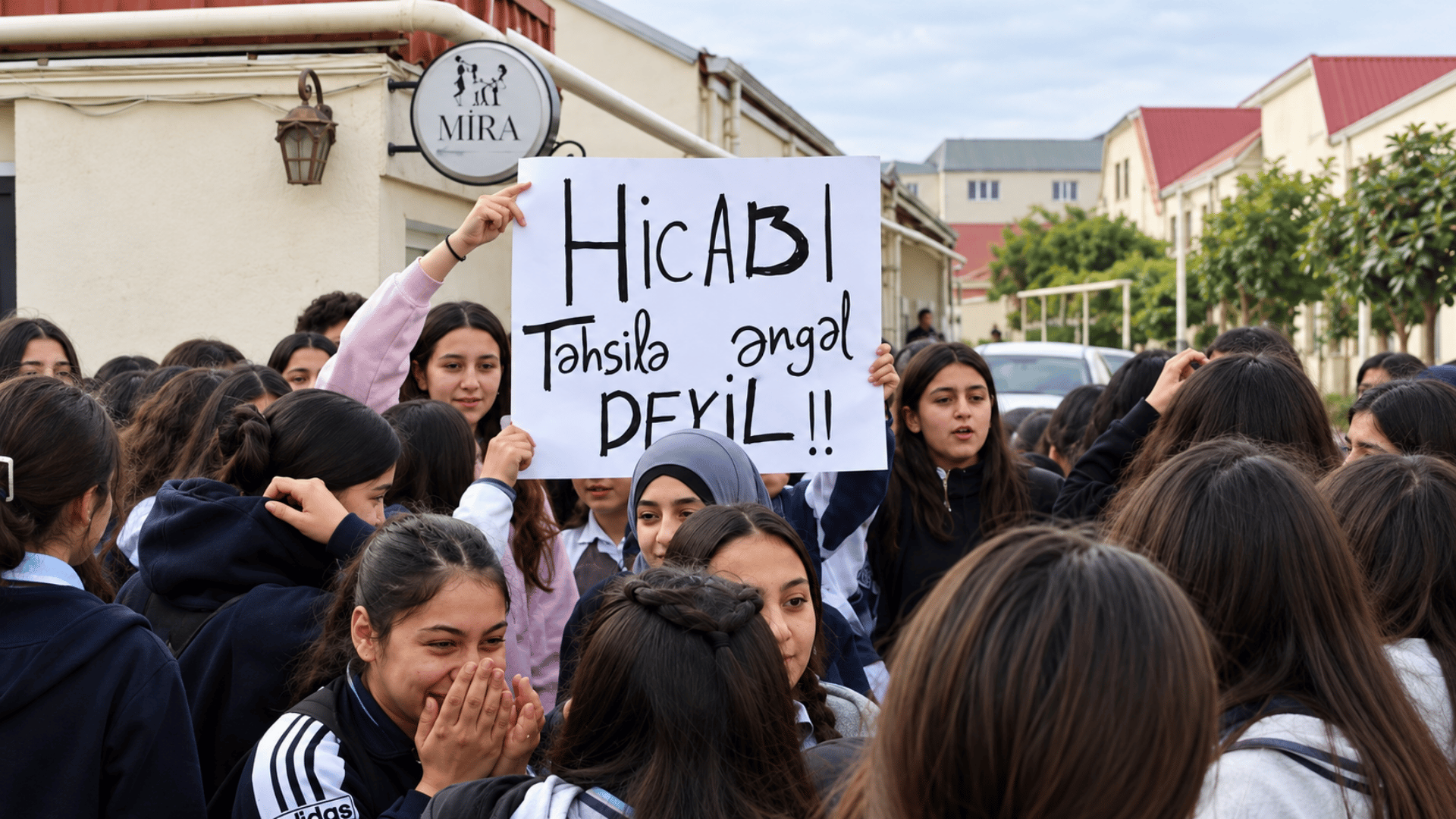
In September, new school uniform requirements came into force in Azerbaijan. Although the rules do not explicitly mention the hijab, schools began turning away pupils who wore one. Speaking at the UN General Assembly, Erdoğan criticised bans on wearing the hijab in schools without naming any specific countries. In Baku, his remarks were seen as an indirect criticism of Azerbaijan.
The subsequent events unfolded as follows:
- 2 October. At a congress of the New Azerbaijan Party (YAP), Aliyev declared: “We do not need anyone’s help or anyone’s patronage.” He also stressed that Azerbaijan’s foreign policy should be shaped in such a way that “no one interferes in our affairs”.
- 12 October. The Interior Ministry reported that police had detained 37 people during protests against the new school uniform requirements. On the same day, Erdoğan’s chief adviser Oktay Saral wrote on X: “It is unacceptable to deny girls who wear the hijab the right to education in Azerbaijan! The hijab is not an obstacle, but a requirement of faith!”
- 13 October. The New Azerbaijan Party described Saral’s remarks as “populist and irresponsible” and called on Turkey’s ruling Justice and Development Party (AKP) to “abandon this harmful policy”.
- 19 October. The Azerbaijan Press Council reported what it called a “biased campaign” in the Turkish media. In the council’s view, reports had taken the school uniform decision out of context and portrayed it as a “ban on wearing the hijab”.
- 21 October. Azerbaijan banned 31 Turkish citizens from entering the country. The list included New Welfare Party leader Fatih Erbakan, MP Ömer Faruk Gergerlioğlu and several journalists. The authorities cited their social media statements against Azerbaijan’s constitutional order and leadership as the reason for the ban. Turkish media reported that Erdoğan called Aliyev the same day and invited him to the Ankara summit.
- 25 October. Erdoğan dismissed Oktay Saral from his post as chief adviser.
- 30 October. Aliyev did not attend the Ankara summit. Azerbaijan’s Foreign Minister Jeyhun Bayramov represented the country at the meeting.
‘Take off your hijab and come into class’: what is happening in Azerbaijan’s schools?
What concessions has Ankara made?
The most significant step was Erdoğan’s dismissal of Oktay Saral as his chief adviser. According to Middle East Eye, which cites its own sources, Baku made three demands of Ankara:
Dismiss Erdoğan’s adviser, prosecute commentators who insulted Aliyev, and block the social media accounts named on a list. The publication reports that Ankara has already blocked some of those accounts.
Saral himself, however, has not retracted his remarks. He said he left his post at the president’s request but stressed that he had said nothing that warranted an apology: “Azerbaijan is my homeland too.”
According to Middle East Eye, Turkish officials have described the disagreements as a “misunderstanding”. Speaking at the summit, Erdoğan made no direct reference to Azerbaijan but said:
“There is no room for division, hostility or discord in the family photograph of the Turkic world.”
On 3 November, while travelling to South Korea, Erdoğan also sent Aliyev Victory Day greetings as his plane passed through Azerbaijani airspace. He delivered the message over the radio through the aircraft’s pilot.
What does Baku want?
Baku has not officially explained why Aliyev skipped the summit. According to APA, the president was due to attend the closing ceremony of the FIFA U-15 World Cup in Baku that day.
Baku has also taken issue with other statements from Ankara. Middle East Eye reports that, at an event organised by a foundation in October, Erdoğan said Turkish children no longer had to go abroad to study because of restrictions linked to their clothing or political views. Azerbaijan also interpreted these remarks as another rebuke.
An Azerbaijani source cited by Middle East Eye summed up Baku’s position as follows: Turkey must recognise the principle of “one nation, two states”. In other words, Baku does not want Ankara to interfere in Azerbaijan’s domestic affairs.
Elman Fattah, head of the Khazar Centre for Research and Analysis, shares a similar view. In an interview with Radio Free Europe/Radio Liberty, he said: “This means rejecting Turkey’s right to veto.” Fattah believes Aliyev is “deliberately shifting the hidden tensions between the two countries into the religious sphere”.
Political analyst Asif Narimanli, meanwhile, argues that
“The tensions between Baku and Ankara have deeper roots.”
Speaking to TodayPress, he noted that Aliyev’s absence…на саммите дает основания для такого вывода.
Azerbaijan is building drone fleet on Caspian sea: what will SALVO and KAYRA change?
What lies behind the disagreements?
Another source of disagreement concerns Armenia. According to an analysis by OC Media, Ankara wants to normalise relations with Yerevan, while Baku insists that this process must remain linked to a peace settlement between Azerbaijan and Armenia.
At the same time, the two countries share significant interests. According to OC Media, on 30 September they signed defence contracts worth around $500 million in total. In early 2026, they also reached a 15-year agreement on gas supplies from the Absheron field to Turkey. Azerbaijan accounted for around 22% of all the gas Turkey imported in 2024. According to figures from Turkey’s Ministry of Trade, bilateral trade reached $4.3 billion in 2025.
What could the visit change?
Political analyst Elkhan Shahinoglu described Erdoğan’s decision to visit Baku as “the right one”. He said:
“If tensions arise between two allies for any reason, they should not delay resolving them.”
Shahinoglu recalled that Erdoğan also visited Baku and addressed the Milli Majlis in 2009, when Turkey was moving closer to Armenia. Relations between the two countries returned to normal afterwards.
There is another sign that tensions may be easing. According to the newspaper Karar, when Turkey considered nominating former Foreign Minister Feridun Sinirlioğlu for the post of UN secretary-general, Azerbaijan backed a candidate from the United Arab Emirates instead. However, in late October, Azerbaijani Foreign Ministry spokesman Aykhan Hajizada welcomed Turkey’s nomination of Sinirlioğlu.
The next test for relations will be the UN climate conference COP31, which will take place in Antalya this month. Middle East Eye reports that Ankara hopes Aliyev will attend the conference. Baku has yet to confirm his visit.
‘Suleyman’s community case’: Baku dormitories and courses become subject of legal proceedings