

House, 6 November 2026
The novelist talks forgotten women, Flaubert’s Egyptian muse, and the books that shaped her
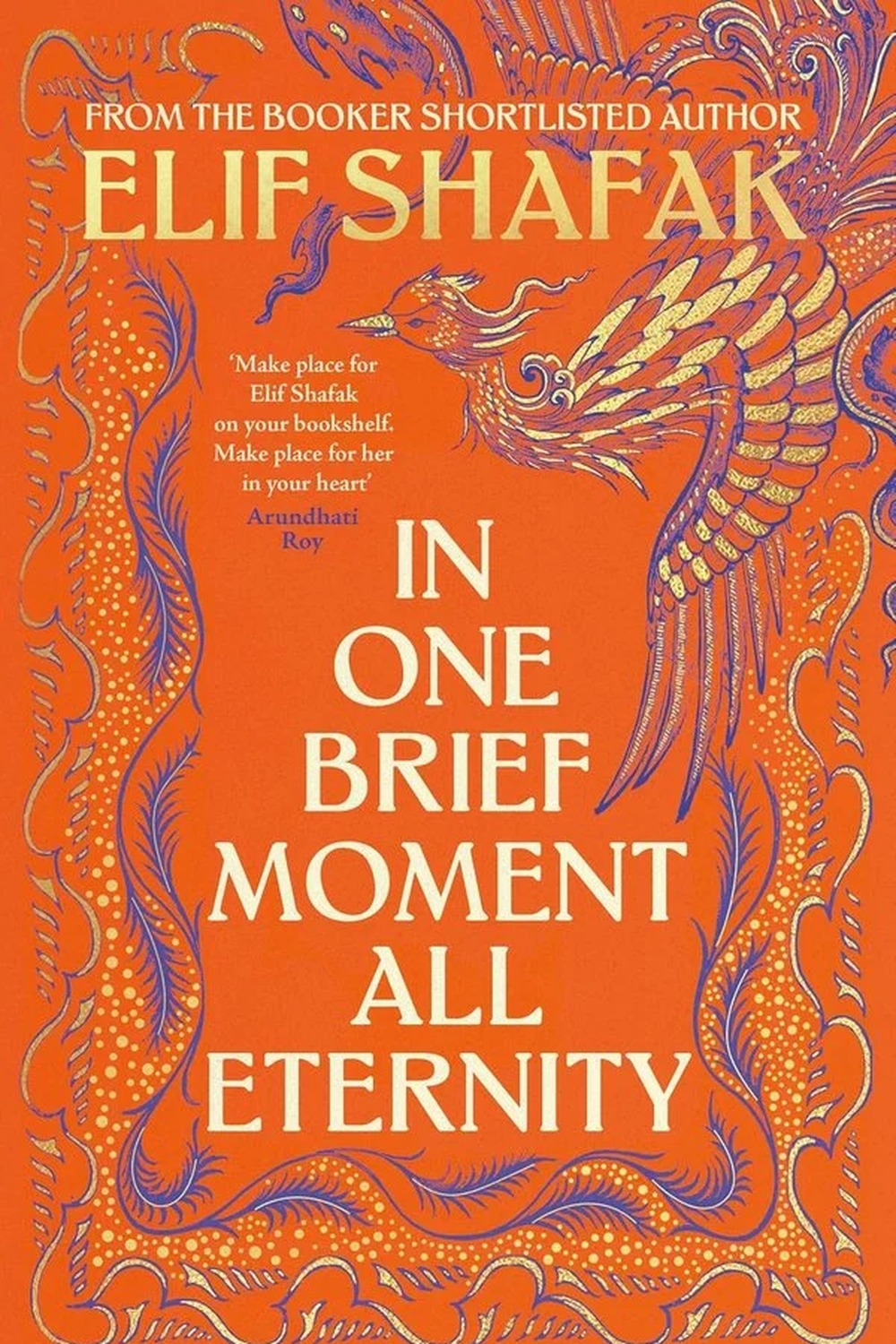
Istanbul, opium, syphilis, a camel named Jamilah and an Egyptian belly-dancer. These are just some of the perspectives we hear from in Elif Shafak’s latest novel In One Brief Moment All Eternity. It may surprise you, therefore, to learn that this book is about 19th century French novelist Gustave Flaubert – or rather, more specifically, the women in his life.
Among the 30 female voices we hear from throughout Flaubert’s boyhood, youth and old age, there’s Emma Bovary – the protagonist of his best-known novel Madame Bovary – his mother, his sister, his niece, his nursemaid, and a servant. Some are real, but many are imagined: ordinary women are dreamt up for the plot, including a baker, a madwoman, a cleaner and an acrobat.
Referring to Emma as ‘the most scandalous female character in world literature’, the There Are Rivers In The Sky (2024) author explains how Flaubert’s creation earnt him street-cred as ‘a connoisseur of the female mind’. Not one to be content with old white men taking all the credit, she was inspired to ‘turn that premise upside down and let women tell his story.’
Like many of us, Elif’s first introduction to Flaubert was in reading Madame Bovary as a student. ‘And to be honest I didn’t like it much. Emma was quite spoiled, greedy and selfish. But I was intrigued by Flaubert and by what he had done.’
From here she read Salammbô and Sentimental Education. And though she wasn’t won over, she was intrigued. Years later, she discovered his letters. ‘He left hundreds of them, written to friends, lovers and companions, and they’re incredible: so moving, with immense honesty, complexity and vulnerability. With the emotional connection I gained from the letters, I went back and reread the novels, and this time it was a completely different experience.’
Though her new novel is told through the voices of the women, it is Flaubert sits at the core. ‘At the heart of the story is a lonely boy who everyone around him saw as a failure and a disappointment.’ Flaubert, who came from an esteemed family of doctors, was pressured into pursuing medicine, or at the very worst, law, despite his complete lack of interest or aptitude. ‘All he wanted to do was art,’ says Elif. ‘The book is dedicated to anyone who has ever felt misunderstood, unloved or treated as the other, and to anyone who feels lonely. Art is our companion, and books are our friends throughout our lives.’
These days, Flaubert’s most popular novel is heralded by most as his one and only great work. By contrast, Elif claims (and she can’t emphasise this enough) that he ‘changed the way we write fiction’: ‘Today we take it for granted, but until him novels weren’t written like this. He had a huge impact on James Joyce and Marcel Proust. Both English and French literature would have been very different without Gustave Flaubert.’
Whether you think Flaubert is an underappreciated great, or that Madame Bovary is overhyped, the subject matter seems strange none the less. Why Flaubert? Why his women? What does this book have to say? Elif refers to it as ‘a book about creativity in a time of crisis’ and ‘a book about turbulent times: war, civil war, brother killing brother, extreme polarisation, which is very relevant to our own times.’ Pursuing these themes in this form seems a feat that Elif is uniquely capable of. And one that can probably only be understood through the act of reading.
As anyone familiar with Elif’s work recognises, that author is ‘always interested not only in stories but in silences: anyone who feels their story has been silenced or pushed to the periphery, especially women who have been written out of history.’ She claims, for example, that at the heart of Madame Bovary is an Egyptian belly dancer. ‘Flaubert travelled extensively across the Middle East, and I think everything he saw on that trip changed him completely. It was an existential transformation. In Esna he met a real belly dancer who I think deeply influenced the way that iconic book was written […] She has been completely forgotten, and I want people to remember her.’
It is only Elif Shafak who could read Madame Bovary, and find herself tracing Middle Eastern history. Drawn to what she refers to as ‘transcendental’ literature over more ‘autobiographical’ writing, she enjoys ‘going beyond the borders of the self’. ‘You leave your little corner of the universe and the box of identity you’ve been given, and make journeys across geography, time and culture, with imagination as your guide. Once I have a story I research it heavily and try to absorb everything I can. I love interdisciplinary and intercultural study: history, philosophy, science. Then everything comes back to fiction, because fiction is where my heart beats.’