
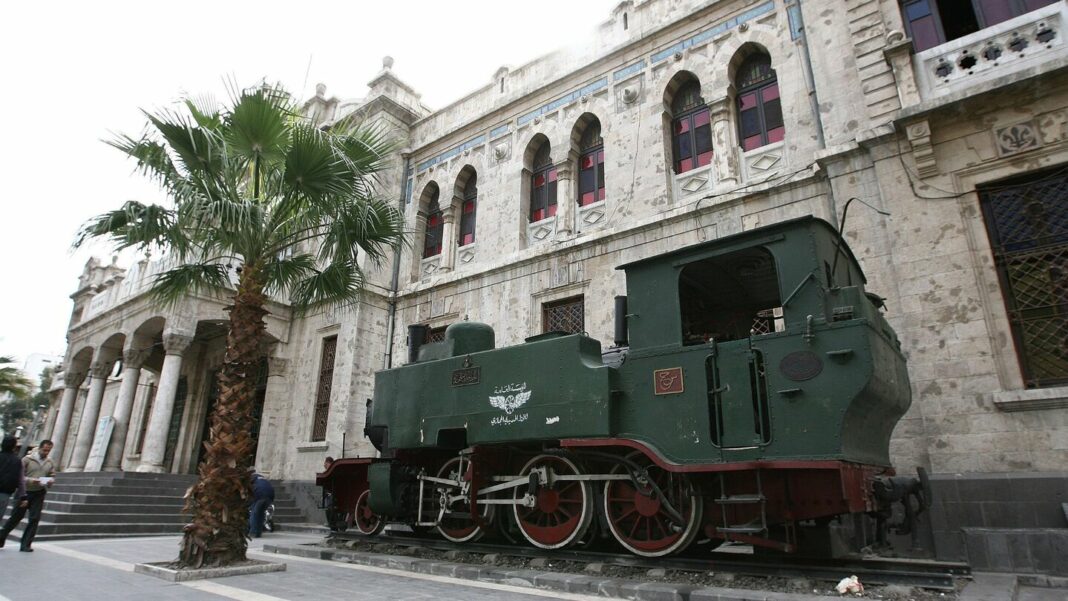

Turkish and Saudi officials signed agreements as part of a Turkish push to revive the Hejaz Railway linking Turkey to the Gulf through Syria, Jordan and Saudi Arabia.
Saudi Arabia and Turkey’s transport ministers signed memorandums of understanding on railway connectivity and logistics services between the two countries on Tuesday. The agreements include reviving and upgrading a more than century-old railway connecting Turkey to Saudi Arabia via Jordan and Syria.
What happened: Turkish Transportation and Infrastructure Minister Abdulkadir Uraloglu traveled to Saudi Arabia on Tuesday to sign the agreements with Saudi officials as part of a Turkish push to revive the Hejaz Railway linking Turkey to the Gulf through Syria, Jordan and Saudi Arabia.
In a post on X, Uraloglu said, “We are in Riyadh for contacts to further advance cooperation between Turkiye and Saudi Arabia in the fields of logistics and railways.”
News of the project’s restoration first emerged in an interview with Saudi broadcaster Al Arabiya published on April 22. Saudi Minister of Transport and Logistic Services Saleh al-Jasser said joint studies for the railway were expected to be completed by the end of the year. He said the project would “enhance regional integration, support trade, and develop a sustainable land transport system between the countries of the region.”
As part of the same efforts, Turkey, Syria and Jordan signed a trilateral transport memorandum in Amman that month aimed at advancing regional transport integration and modernizing the railway network connecting the three countries. Speaking at the signing ceremony on April 4, Uraloglu outlined how Ankara envisions the project unfolding, saying the first step would be restoring the rail connection between Turkey and Syria’s Aleppo, then linking to the existing Aleppo-Damascus-Jordan route.
Why it matters: The railway project is a modern extension of the historic Ottoman-era Hejaz Railway, which connected Turkey to Saudi Arabia via Jordan and Syria, with branch lines extending to Lebanon. First operating in 1908, it ran from Damascus to Medina and played an important role in regional connectivity before being severely damaged during World War I.
Once revitalized, the railway is expected to connect with the Gulf railway network to help regional states overcome transportation disruptions and strengthen economic connectivity.
The US-Israel-Iran war has disrupted one of the Gulf’s most important trade routes — the Strait of Hormuz — and prompted countries to seek alternative transport corridors.
Ankara’s longer-term goal is to extend the line toward Oman and the Arabian Sea, creating an overland corridor that could serve as an alternative to routes dependent on the Strait of Hormuz.
Know more: At an event hosted by the International Institute for Strategic Studies on June 2, Fidan said disruptions to maritime trade and rising shipping costs following Iran’s de facto blockade of the chokepoint had increased the need for more stable overland alternatives. He added that such routes could support not only energy transport but also trade, food and goods flows between the region and global markets.
Speaking at the AA City Economies Summit in Gaziantep on Tuesday, Turkish Trade Minister Omer Bolat said the project could help reduce Israel’s influence while bringing greater prosperity and stability to the Middle East.
“The reduction of Israel’s influence in the region, together with increased political and economic solidarity among us, will bring economic prosperity, peace and stability to the Middle East, the Gulf and Turkey’s southern borders,” Bolat said.
Ezgi Akin contributed to this report.