

Eurasia review, April 23, 2026
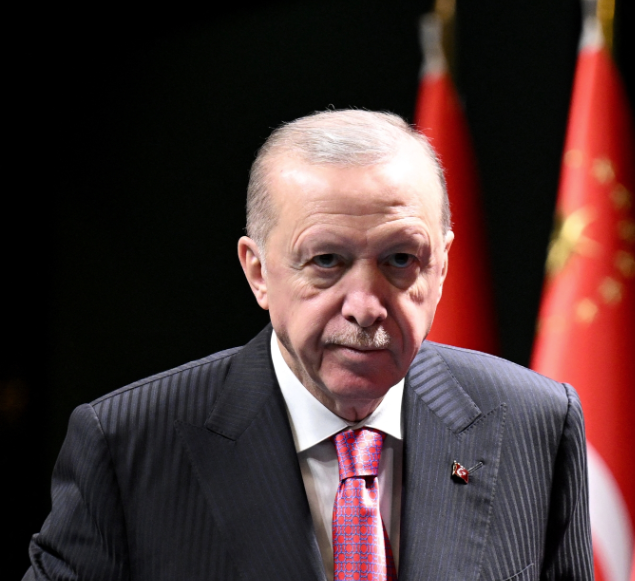
Not only was Turkish President Recep Tayyip Erdoğan not invited to an EU summit in Cyprus this week, but relations between Ankara and Brussels have taken a hit just as leaders are landing.
The European Commission is still in damage control mode after Ursula von der Leyen put Turkey in the same category as Russia and China in remarks to a German newspaper Die Zeit on Sunday.
The gaffe quickly turned into a public spat among senior European figures on the strained relationship with Turkey.
Charles Michel, the former European Council president, charged in to admonish von der Leyen, with whom he has a storied past, writing on X that “Europe doesn’t get stronger by applying double standards or simplifying reality”.
Cypriot President Nikos Christodoulides, who will host the EU leaders on Thursday and Friday, hit back at Michel, writing: “Let me remind you that Turkey invaded Cyprus in 1974”.
Meanwhile, NATO Secretary-General Mark Rutte again assumed his role as Europe’s political fixer on a trip to Ankara on Wednesday. But this time his mission was to contain fallout originating in Brussels rather than Washington.
“NATO will always do what is necessary to defend Turkey,” Rutte said, speaking at the headquarters of Aselsan, one of Turkey’s leading defence companies. He praised Turkey’s contribution to the Alliance, just months before Turkey hosts a major NATO summit.
He carried an olive branch to Ankara to make peace following the diplomatic grenade launched by the EU chief.
Rutte echoed von der Leyen’s trinity of global threats, listing Russia’s war against Ukraine and China’s military modernisation, but pointedly replaced Turkey with Iran, referencing “its actions spreading terror and chaos”.
The Commission itself backtracked on von der Leyen’s comments by issuing a statement describing the NATO ally as an “important partner” and a candidate to join the bloc.
High hopes of a thaw
It was Christodoulides who first raised the prospect of inviting his Turkish counterpart to this week’s EU summit.
“Just as we will invite all leaders, we will also invite the Turkish president,” he said in June last year. He repeated this as recently as November, when talking to the Financial Times.
In the end, the invitation never came. Marilena Raouna, Cyprus EU affairs minister, put it down to vague “geopolitical developments”. An EU official confirmed to Euractiv that Erdoğan wasn’t invited.
Instead, Friday’s meeting will include leaders from Lebanon, Jordan, Egypt and Syria, alongside the secretary-general of the Gulf Cooperation Council, a spokesperson for the Cyprus presidency said.
Turkey’s role in the aftermath of the US-Israel attack on Iran has proven highly contentious. Hakan Fidan, the Turkish foreign minister, recently accused Israel, Greece, and Cyprus of fuelling regional instability through their expanding military cooperation.
A well-informed source close to the matter told Euractiv in Athens that Brussels’ apparent shift in attitude towards Turkey can largely be explained by Ankara’s close ties with the regime in Tehran.
“It is now clear to Brussels as well that Fidan is effectively Iran’s man in Turkey, hence Ankara’s push to position itself as a mediator in the conflict rather than Pakistan,” the source said.
The same source added that Turkey’s fragile economic situation constitutes an additional risk factor for the EU, noting that conditions have worsened since the arrest of Istanbul mayor and presidential candidate Ekrem İmamoğlu in March 2025.
Finally, the growing popularity of the far right across the EU, much of which opposes Turkey’s EU accession path, is also influencing the EPP’s long-held stance, the source said.
“Turkey possesses military capability and strategic reach that Europe needs today,” former President of the Republic of Turkey, Abdullah Gül, said on Wednesday at the Delphi Economic Forum in Greece.
Gül also said that the unresolved Cyprus issue should not prevent Turkey from joining the European security architecture.